
What is ClearCorrect Invisible Braces?

Why ClearCorrect?

You deserve a smile you can be proud of, and ClearCorrect can make it happen. Our clear aligners are comfortable, removable, and, best of all, nearly invisible. Most people won’t even notice that you’re wearing them. And because you can easily remove the aligners to eat, you don’t have to change your diet like you might with braces. You can show off your smile with almost no impact on your daily life. Some severe cases of misalignment do require metal braces, but most patients can be treated just as effectively with clear aligners. The cost and length of treatment are generally comparable. Why wouldn’t you choose ClearCorrect?

How does it work?

Your doctor will take impressions, x-rays, and photos of your teeth, then send them to us with instructions for the tooth movements you need to achieve your ideal smile. We’ll create a 3D model of your mouth and then a series of clear plastic aligners custom-fitted to your teeth. Each aligner will apply targeted pressure to the teeth selected by your doctor, slowly moving them into alignment. Every six weeks or so, your doctor will check on your progress and give you your next two sets of aligners. Unlike other clear aligner companies, we manufacture your aligners in phases, so your doctor can request changes at any time. Treatment usually takes 6–18 months, but you’ll start to see results right away.

What can it do?

ClearCorrect can treat a wide variety of issues that keep people from achieving their ideal smiles. Straighter teeth don’t just look better; they work better too. Poorly-aligned teeth can interfere with bite function, wear out quicker, and are more prone to cavities. Ask your doctor how ClearCorrect can help you.

Example of what a ClearCorrect Aligner.

Dentures and Implants: A Perfect Marriage!

From your first visit to the completion of your treatment, at Drews Dental we treat your mouth like it’s our own.  With an office in Lewiston that enables us to service Auburn as well, you’ll be sure to receive high quality dental care no matter where you live.  When we were children none of us dreams of one day having a set of dentures like grandma or grandpa.  Unfortunately due to less than ideal dental care through our lifetime, dentures can be a reality for many of us.  Population studies show over 45 million adults in America wear either a full or a partial denture.  While dentures are a much better option than not having any teeth, they do come with their own set of challenges such as a difficulty with eating certain foods, a clicking sound that happens while talking or even gum sores that develop under the prosthesis.

While these problems have been a part of the experience of wearing dentures, that no longer has to be the case. With the use of dental implants, dentures, or even partial dentures, can be secured in a patient’s mouth, thus eliminating all of the challenges that have been inherent with wearing dentures in the past. With implants to support them, dentures can look, feel and function just like natural teeth. In fact, existing dentures can be modified to be supported by implants or new dentures can be designed for implants from the get go.

The most important consideration in your decision to choose an implant overdenture or denture implant is the limited retention and stability of a traditional denture which relies on suction alone. Over time, retention only worsens due to continual bone loss (atrophy) of your dental arches from the lack of teeth. When a tooth loses bone support through the years, its root can be saved and used to anchor an implant overdenture. The significant concerns regarding function, retention, stability, mastication (chewing), and speaking can be overcome by maintaining the level of bone present in the upper jaw (maxilla) and lower jaw (mandible). These issues can be successfully accomplished by keeping your own roots, or if you are edentulous (without teeth) having dental implants placed by your dentist may be an option.

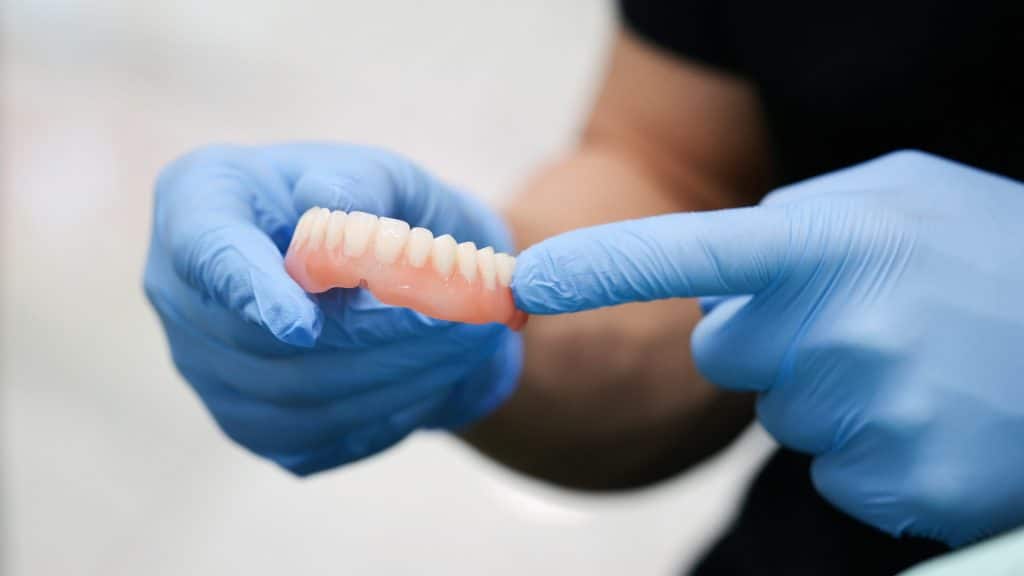
Examples of Implant use with Dentures.

One of the biggest advantages of an overdenture with implants is that the implants will prevent you from losing the bone. But the advantages that are easily appreciated are that the overdenture can be held by the implants so it does not slip out of place easily and it can also be supported by the implants, in which case it will feel like you are biting with solid support instead of pressing against the gums.

 If you have any questions please contact Dr. Peter Drews, D.D.S. and staff at Drews Dental Services, P.C. at 210 Sabattus Street, Lewiston, ME 04240 or call 207-782-5308 for an appointment. Check out our new website and www.mainedentalclinic.com serving the Lewiston and Auburn Maine areas.

Natural Remedies for Gum Disease

Every week the clinical staff at Drews Dental Services, P.C. receives questions from patients regarding natural supplements that claim to help the health of their gums. There is allot of information on the web about these supplements, unfortunately there are no large studies that follow good research standards that allow us to state “This is the best thing since sliced bread!”.  A good source of evidence based research reviews can be found at the Cochrane Review (http://summaries.cochrane.org/) or at the American Dental Associations Evidence Based Dentistry Database (http://ebd.ada.org/). My personal search of the web found an excellent review written by Cathy Wong that was published by About.com and includes references for additional reading.

If you have any questions please contact Dr. Peter J Drews, D.D.S. and staff at Drews Dental Services, P.C. at 210 Sabattus Street, Lewiston, ME 04240 or call 207-782-5308 for an appointment. Check out our new website and www.mainedentalclinic.com serving the Lewiston and Auburn Maine areas.

What is Gum Disease?
Gum disease, also known as periodontal disease, is a condition in which the gums, deeper supporting tissue, and potentially the bone surrounding teeth become infected and inflamed. Gum disease starts with plaque on the teeth, a sticky white substance that coats teeth. It’s formed when bacteria in the mouth mixes with saliva and residues from starchy foods and sugar in your diet.

If plaque isn’t properly removed from teeth by brushing and flossing, it accumulates and hardens underneath the gumline into tartar. Once tartar builds up, it’s much more difficult to remove than plaque and usually requires a cleaning at the dentist.
Over time, it can lead to inflamed gums, or gingivitis. This is a mild form of gum disease. One of the most common symptoms is darker red gums that bleed with brushing or flossing. Professional cleaning can reverse gingivitis.

If there is bleeding with pain, it is a symptom that the infection and inflammation has spread to the deeper tissues and bone, called periodontitis. After the age of 30, periodontitis is responsible for tooth loss, more so than cavities.

  • Symptoms of Gum Disease
  • Red, swollen gums
  • Bleeding while brushing or flossing
  • Receding gums
  • Chronic bad breath
  • Loose teeth or widening space between gums and teeth
  • Remedies for Gum Disease

Diagram showing gum disease and destruction of supporting tissue.

Here are seven natural remedies that are used to treat gum disease.

1) Vitamin C
The link between vitamin C deficiency and gum disease is well known. Back in the 18th century, sailors ate limes during long trips at sea to keep their gums from bleeding. A study in the Journal of Periodontology found that people with low intakes of vitamin C had higher rates of periodontal disease. Researchers looked at 12,419 adults in the United States. People who consumed less than the recommended dietary allowance (RDA) of 60 mg per day were 1.5 the risk of developing severe gingivitis as people who consumed more than 180 mg. Vitamin C is believed to help gum disease because vitamin C is an antioxidant and is needed to repair connective tissue and accelerate bone regeneration.
To boost your intake of vitamin C, eat foods rich in vitamin C, such as grapefruit, oranges, kiwi fruit, mango, papaya, strawberry, red pepper, broccoli, brussels sprouts, and cantaloupe. Vitamin C can also be taken in supplement form. Avoid chewable vitamin C, because the acidity may promote the erosion of tooth enamel over time.

2) Vitamin D
Vitamin D has been found to have anti-inflammatory effects and may reduce susceptibility to gum disease. A study by the Boston University evaluated the association between vitamin D status and gingivitis. They analyzed data from 77,503 teeth in 6700 people in the third National Health and Nutrition Examination Survey and found that people with higher blood levels of vitamin D were less likely to experience bleeding gums during gingival probing.
Sun exposure is one of the most important sources of vitamin D, because UV rays from the sun trigger the synthesis of vitamin D in skin. The National Institutes of Health Office of Dietary Supplements suggests 10 to 15 minutes of sun exposure twice a week, however the further away from the equator you live, the more polluted your city, and the more cloud cover there is, the less likely that this sun exposure will be sufficient. Look for at least 200 IU in a multivitamin.

3) Stress reduction
Stress contributes to gum disease by increasing plaque accumulation. A University of Dusseldorf study examined how exam stress would impact plaque and gum bleeding. All students had a professional tooth cleaning 4 weeks prior to exams and then 4 weeks after exams. They found that students had significantly higher rates of plaque and gingivitis after exams compared to a control group of students that didn’t write exams.

4) Coenzyme Q10
There is some evidence has linking gum disease to lower levels of coenzyme q10, an antioxidant made naturally in the body, found widely in foods, and available in supplement form. Some researchers say that coenzyme q10 is needed to properly repair gum tissue. A study by Osaka University in Japan found improvement in infection and inflammation after 3 weeks of taking a topical coenzyme q10 toothpaste. You can look find toothpaste containing coenzyme q10 at natural grocers, health food stores, and online.

5) Tea tree oil
Tea tree oil has proven antibiotic properties. A topically applied tea tree oil gel was evaluated in a double-blind placebo-controlled study involving 49 people with severe chronic gingivitis. They were told to brush twice a day and were assessed after 4 and 8 weeks. The group that brushed with tea tree oil had a significant reduction in the degree of gingivitis and bleeding. However, tea tree oil gel did not reduce the amount of plaque. Use only commercial tea tree toothpaste, not tea tree oil.

6) Cranberry                                                                                                              Cranberry may help gum disease by preventing bacteria from sticking to teeth. Look for cranberry juice with no added sugar at the health food store. A typical amount is 4 ounces a day. Consult your doctor if you are taking the blood thinner warfarin or have kidney stones.

7) Consider an oscillating rotating electric toothbrush
A Dutch study reviewed randomized controlled trials and found that the use of electric toothbrushes with oscillating, rotating heads for 3 months reduced gingivitis compared to manual brushing with a regular toothbrush. There was also some reduction in plaque, although it was not statistically significant.

Sources
___________________

Carinci F, Pezzetti F, Spina AM, Palmieri A, Laino G, De Rosa A, Farina E, Illiano F, Stabellini G, Perrotti V, Piattelli A. Effect of Vitamin C on pre-osteoblast gene expression. Arch Oral Biol. 2005 May;50(5):481-96.

Deinzer R, Granrath N, Spahl M, Linz S, Waschul B, Herforth A. Stress, oral health behaviour and clinical outcome. Br J Health Psychol. 2005 May;10(Pt 2):269-83.

Dietrich T, Nunn M, Dawson-Hughes B, Bischoff-Ferrari HA. Association between serum concentrations of 25-hydroxyvitamin D and gingival inflammation. Am J Clin Nutr. 2005 Sep;82(3):575-80.

Hanioka T, Tanaka M, Ojima M, Shizukuishi S, Folkers K. Effect of topical application of coenzyme Q10 on adult periodontitis. Mol Aspects Med. 1994;15 Suppl:s241-8.

Nishida M, Grossi SG, Dunford RG, Ho AW, Trevisan M, Genco RJ. Dietary vitamin C and the risk for periodontal disease. J Periodontol. 2000 Aug;71(8):1215-23.
National Institutes of Health Fact Sheet on vitamin D

Soukoulis S, Hirsch R. The effects of a tea tree oil-containing gel on plaque and chronic gingivitis. Aust Dent J. 2004 Jun;49(2):78-83.

What is happening to my 6 year old’s teeth?


Question:
Just wondering what this might mean for my 6 year old? Will the baby tooth still fall out if the adult tooth is growing behind it? The baby tooth is barely loose. Should we anticipate braces?

Normal Eruption Pattern of Central Incisals

Answer:

What you are observing is the normal eruption pattern and timing for your 6 year old child.  For your reference below is a chart with eruption timing going forward.  Remember that these are ranges and not all children exhibit the same growth patterns.    Notice how the tooth is behind the primary (baby) tooth, once again this is a variation of normal growth pattern.  The adult tooth forms in a sack called a tooth bud and due to the shape the the jaw bone it can be located toward the inside of the primary tooth.  Sometimes they will naturally migrate to the buccal due to growth pattern and the force of the tongue against this tooth.  You commented that the baby tooth is not loose which is not a concern to me at this time.  What a few more months if it is still solid we will need to help mother nature with the removal of this tooth.

Now your last question of should we anticipate orthodontics in the future.  Long answer made short, you got a 50/50 chance.  I do not see much spacing between the primary teeth.   It has been shown discrepancy in size of primary to adult teeth to an average of nearly 6 mm in the upper arch and 2 mm in the lower, and would suggest that a similar amount of spacing is necessary in the deciduous dentition to provide against crowding of permanent teeth.  In a 6 year old there is still allot of jaw growth to take place so we will need to wait to age 11-13 yo to really know for sure.

ADA suggests ‘recall bias’ in x-ray, brain tumor study

April 10, 2012 — In response to the study released today that found an association between frequent dental x-rays and an increased risk of developing meningioma, the ADA issued the following statement:

The ADA has reviewed the study and notes that the results rely on the individuals’ memories of having dental x-rays taken years earlier. Studies have shown that the ability to recall information is often imperfect. Therefore, the results of studies that use this design can be unreliable because they are affected by what scientists call “recall bias.” Also, the study acknowledges that some of the subjects received dental x-rays decades ago when radiation exposure was greater. Radiation rates were higher in the past due to the use of old x-ray technology and slower speed film. The ADA encourages further research in the interest of patient safety.

The ADA noted that its long-standing position is that dentists should order x-rays for patients only when necessary for diagnosis and treatment. Since 1989, the ADA has published recommendations to help dentists ensure that radiation exposure is as low as reasonably achievable.

As part of the ADA’s recommendations to minimize radiation exposure, the ADA encourages the use of abdominal shielding and thyroid collars on all patients. In addition, the ADA recommends that dentists use E or F speed film, the two fastest film speeds available, or a digital x-ray.

At Drews Dental Services, P.C. we follow all guideline established by The Maine Radiation Control Program. The x-ray section registers approximately 1060 x-ray facilities . There is an annual registration fee per x-ray machine and a requirement for periodic inspections. These inspections are performed by third party Qualified Experts who are approved by the agency.  We also insure we are using the lowest amount of x-ray radiation by using Kodak digital x-ray technology.  With digital radiography, the dentist is able to acquire more information than they were able to with film. Digital x-ray sensors are much more sensitive to radiation than film x-rays. Because of this, dentists are able to turn the amount of radiation down to about 50% of the radiation than was used with film. This is safer for you in more ways than one: you get less radiation and the doctor sees more information and is able to more accurately diagnose the health of your mouth and teeth.

If you have any questions please contact Dr. Peter Drews, D.D.S. and staff at Drews Dental Services, P.C. at 210 Sabattus Street, Lewiston, ME 04240 or call 207-782-5308 for an appointment. Check out our new website and www.mainedentalclinic.com serving the Lewiston and Auburn Maine areas.

Why do I need these fillings? Nothing hurts.

This was a question asked by email at our practice website (www.mainedentalclinic.com) from someone looking for a second opinion on dental treatment. This is not a unique question and is asked by patients to Dr. Peter Drews, D.D.S. and staff at Drews Dental Services, P.C… It seems reasonable to question if you need to go ahead with treatment when you do not have symptoms of tooth pain. After all, when you sprain an ankle or have the flu you have severe symptoms that indicate a health problem. But tooth decay is similar other health conditions like high blood pressure, anemia, or diabetes where you have the disease but many times do not have symptoms at first. Decay doesn’t cause pain until it reaches the pulp or nerve of the tooth. In modern dentistry we have the ability to catch decay early; this allows you to avoid severe pain and possible root canal treatment. In fact, by the time the decayed tooth hurts, it’s usually too late to save the tooth with a simple filling and more complex treatment is required. If you have any questions please feel free to contact Dr. Peter Drews, D.D.S. at 207-782-5308 where we are located at 210 Sabattus Street, Lewiston, ME 04240.

Patient with 10+ year old filling and no pain. Notice shadow around roots showing infection.

April Is Cancer Control Month

Cancer is the second leading cause of illness and death in the United States, accounting for one in four deaths. One-third of all cancer deaths can be prevented with lifestyle changes and early detection.

In 2011, close to 37,000 Americans will be diagnosed with oral or pharyngeal cancer. 66% of the time these will be found as late stage three and four disease. It will cause over 8,000 deaths, killing roughly 1 person per hour, 24 hours per day. Of those 37,000 newly diagnosed individuals, only slightly more than half will be alive in 5 years. This is a number which has not significantly improved in decades. The death rate for oral cancer is higher than that of cancers which we hear about routinely such as cervical cancer, Hodgkin’s lymphoma, laryngeal cancer, cancer of the testes, and endocrine system cancers such as thyroid, or skin cancer (malignant melanoma). If you expand the definition of oral cancers to include cancer of the larynx, for which the risk factors are the same, the numbers of diagnosed cases grow to approximately 50,000 individuals, and 13,500 deaths per year in the US alone. Worldwide the problem is much greater, with over 640,000 new cases being found each year.

Low public awareness of the disease is a significant factor, but these cancers could be found at early highly survivable stages through a simple, painless, 5 minute examination by a trained medical or dental professional.  At Drews Dental Services, P.C. we pride ourselves at staying updated on technology to provide our patients with the highest standard of care we can offer.  Dr. Peter Drews, D.D.S  and staff has invested in VELscope technology.

VELscope® is a revolutionary hand-held device that provides Ideal Dentistry with an easy-to-use adjunctive mucosal examination system for the early detection of abnormal tissue. The patented VELscope technology platform was developed in collaboration with the British Columbia Cancer Agency and MD Anderson Cancer Center, with funding provided in part by the NIH. It is based on the direct visualization of tissue fluorescence and the changes in fluorescence that occur when abnormalities are present.

The VELscope handpiece emits a safe blue light into the oral cavity, which excites the tissue from the surface of the epithelium through to the basement membrane (where premalignant changes typically begin) and into the stroma beneath, causing it to fluoresce. Typically, healthy tissue appears as a bright apple-green glow, while suspicious regions are identified by a loss of fluorescence, which thus appear dark.

The clinician is then able to view the different fluorescence responses to help differentiate between normal and abnormal tissue. In fact, VELscope is the only non-invasive adjunctive device clinically proven to help discover occult oral disease.

If you have any questions please contact Dr. Peter Drews, D.D.S. and staff at Drews Dental Services, P.C. at 210 Sabattus Street, Lewiston, ME 04240 or call 207-782-5308 for an appointment. Check out our new website and www.mainedentalclinic.com serving the Lewiston and Auburn Maine areas.

Do I Grind my Teeth?

Bruxism is a condition in which you grind, gnash or clench your teeth. If you have bruxism, you may unconsciously clench your teeth together during the day or grind them at night, which is called sleep bruxism. In most people, bruxism is mild enough not to be a health problem. While bruxism may be a diurnal or nocturnal activity, it is bruxism during sleep that causes the majority of health issues; it can even occur during short naps. Bruxism is one of the most common sleep disorders.
Bruxism may be mild and may not even require treatment. However, it can be frequent and severe enough to lead to jaw disorders, headaches, damaged teeth and other problems. Because you may have sleep bruxism and be unaware of it until complications develop, it’s important to know the signs and symptoms of bruxism and to seek regular dental care.
Most people are not aware of their bruxism. Only an estimated 5% go on to develop symptoms, such as jaw pain and headaches, which require prompt treatment.[6] A sleeping partner or parent may notice the behavior first, although sufferers may notice pain symptoms without understanding the cause.
Bruxism can result in occlusal trauma, the abnormal wear patterns of the occlusal surface, abfractions and fractures in the teeth. Over time, dental damage increases. Bruxism is the leading cause of occlusal trauma and a significant cause of tooth loss and gum recession. Bruxism can be loud enough to wake a sleeping partner. Some individuals clench without significant lateral movements.
In a typical case involving lateral motion, the canines and incisors of the opposing arches are moved against each other laterally, i.e., with a side-to-side action, by the medial pterygoid muscles that lie medial to the temporomandibular joints bilaterally. This movement abrades tooth structure and can lead to the wearing down of the incisal edges of the teeth. People with bruxism may also grind their posterior teeth, which will wear down the cusps of the occlusal surface. Most (but not all) bruxism includes clenching force provided by masseter and temporalis muscle groups, but some bruxers clench and grind front teeth only, which involves neither masseter nor temporalis muscle groups. Teeth hollowed by previous decay (caries), or dental drilling, may collapse from bruxism’s cyclic pressures.
Eventually, bruxism with lateral movements shortens and blunts the teeth being ground and may lead to myofascial muscle pain, temporomandibular joint dysfunction and headaches. If enough enamel has been abraded, the softer dentin will be exposed, and abrasion will accelerate. This opens the possibility of dental decay and tooth fracture, and in some people, gum recession. Early intervention by a dentist is advisable. In severe, chronic cases, bruxism can lead to arthritis of the temporomandibular joints. The jaw clenching that is often part of bruxism can be an unconscious neuromuscular daytime activity, which should be treated as well, usually through physical therapy (recognition and stress response reduction).
A common reason for prescribing a bite splint is to protect the teeth from excessive abrasion in patients with bruxism. Splints are also used frequently to treat patients with internal TMJ derangement and other TMDs with associated pain symptoms, such as tension headache and cervical-, neck-, and oral/facial pain. A common goal of bite splint treatment is to protect the TMJ disks from dysfunctional forces that may lead to perforations or permanent displacements. Other goals of treatment are to improve jaw-muscle function and to relieve associated pain by creating a stable balanced occlusion.
An important advantage of bite splints is that they can be used to make reversible changes in the occlusion. Occlusion affects the way jaw muscles function, and jaw muscle function affects the way the TMJ functions. Therefore changes in the patient’s occlusion will always have some effect on the jaw muscles and the TMJ structures. A stable, balanced occlusion is important for maintaining normal jaw muscle and TMJ function.
If you currently have a bite splint, these are things you should consider if you have a correctly adjusted bite splint.
1. If the appliance does not make your bite more comfortable, it is probably not in correct harmony with your TMJs
2. Occlusal splints usually have to be adjusted after placement. As the jaw joints are freed up to go to a more physiologic position in their sockets, the biting surface of the appliance may need to be corrected to maintain harmony with the TMJs. The number of times adjustments are needed is dependent on the structural condition of the TMJs.
3. Occlusal splints are not a panacea. Their effectiveness is dependent on a very carefully made diagnosis and appliance design that is directed at solving a specific type of disorder.
4. Patients should feel free to ask their dentist to explain the diagnosis and how the appliance can help.
If you have any questions please contact Dr. Peter Drews, D.D.S. and staff at Drews Dental Services, P.C. at 210 Sabattus Street, Lewiston, ME 04240 or call 207-782-5308 for an appointment. Check out our new website and www.mainedentalclinic.com serving the Lewiston Maine and Auburn Maine areas.